I was listening to a podcast, a vet being interviewed about the state of modern horse health, and he said something that stopped me mid-drive. He said that horses and their owners are becoming obese and insulin resistant together, and that the two almost always move in the same direction. He was noting the pattern: pets mimic their owners.
I kept thinking about it for days. Not because it was shocking, but because it pulled on a thread I’d been watching for a long time without quite having the words for it. We bring our patterns to our horses. Not just our metabolic ones. The way we manage discomfort. The way we respond when something difficult is being asked of us. The way we reach for something external rather than sit with what’s actually happening.
We have always found ways to not do that.
The era we thought we’d left behind
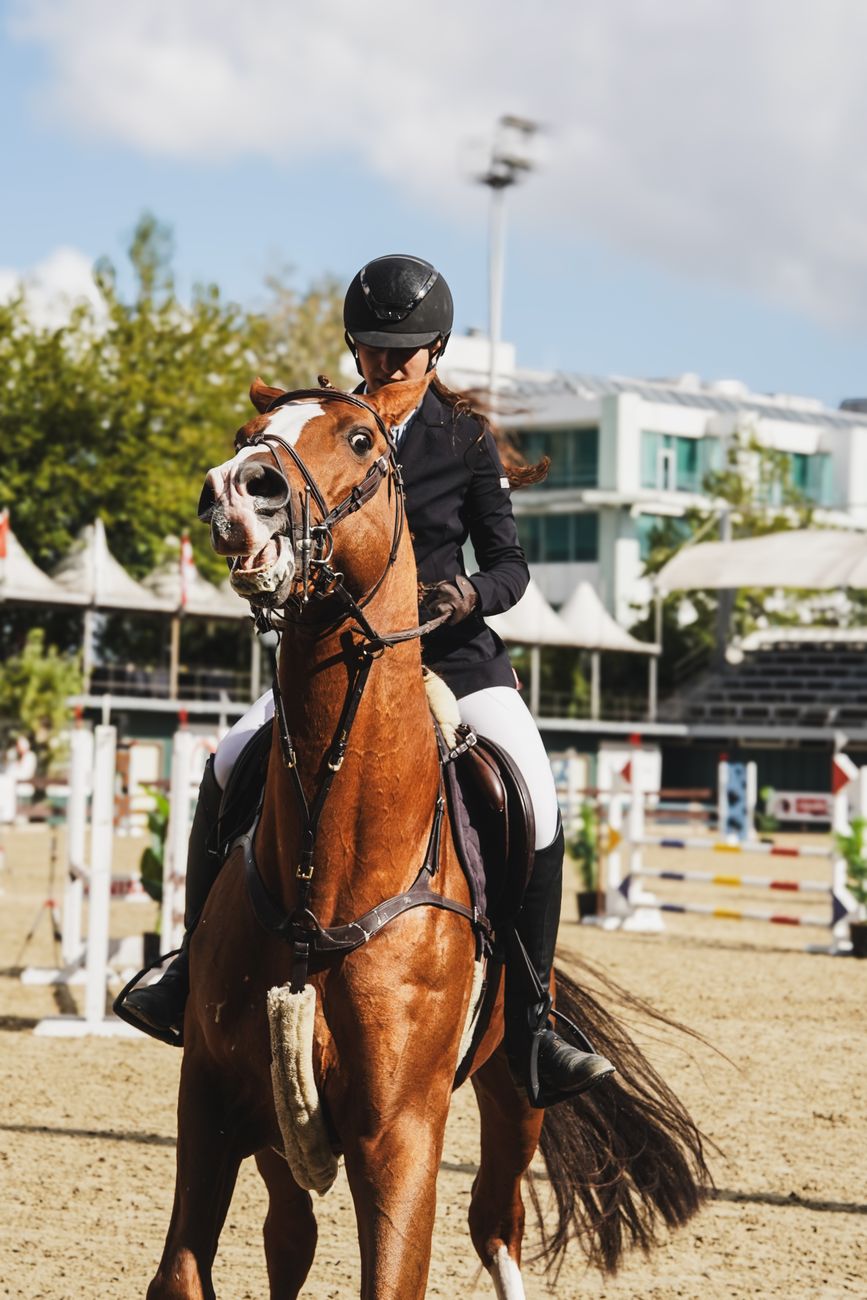
There was an era, not so long ago, still present in plenty of yards, where the approach to difficult behaviour was simple. Ride through it. Leg on. Don’t let the horse win. A horse that pinned its ears at the girth was being mareish. A horse that resisted the contact was being stubborn. A horse that exploded under pressure was being dominant, and the answer was more pressure until the behaviour stopped. The behaviour was the problem, and the solution was to eliminate it.
That era has a bad reputation now, and rightly so. But underneath the language, it was avoidance. Don’t ask what the behaviour means. Don’t follow the thread. Suppress it and move on.
We told ourselves we’d moved past that. And in some ways we have. The welfare conversation is real, the shift in understanding is real, and horses are better off for it in many ways. But look at what replaced it.
A rider posts about a horse who is resistant, girthy, pinning ears, short in the stride. Before anyone asks a single question about the training history or the relationship, the comments arrive. Kissing spine. Get the ulcer scope. Saddle fit. PSSM. The thread moves fast, and by the end of it the owner is frightened, overwhelmed, and convinced their horse is broken in several different ways simultaneously. The behaviour has been accounted for. The question underneath it has still not been asked.
We moved from suppressing the behaviour to medicalising it. Both treat the behaviour as the problem. Neither asks what it is trying to say.
And the medicalisation era is harder to see clearly, because it has borrowed the language of care. It costs money, which looks like commitment. It involves specialists, which looks like responsibility. It has the vocabulary of welfare. Telling someone to push through resistance feels obviously wrong now. Telling someone to get the ulcer scope feels obviously right. But if the diagnosis becomes the answer instead of part of the question, we are still doing the same thing. We are still finding a way to not sit with what the horse is actually communicating.
This is not an argument against medicine. It is an argument about avoidance.
When the body finally breaks
The performance horse world shows this most clearly. A horse that doesn’t understand what is being asked will find ways to communicate that. Tension in the back. Resistance at the contact. Behaviour that looks like disobedience and is actually confusion. The old response was to shut it down and demand more. A body that is tense, confused, braced, and working dysfunctionally under high demand for long enough will eventually break. The ulcers become real. The kissing spine becomes real. The physical pathology is genuine.
But treat the physical pathology and return the horse to the same situation, the same confusion, the same demand, the same absence of a real training conversation, and you have treated the symptom. The cause is still there, still accumulating.
This is where the two eras compound each other rather than replace each other. Suppress first, medicalise later, never ask the question in the middle.

The transaction mistaken for care
The online framing that good horse ownership is defined by what you can afford to spend on diagnostics deserves to be named for what it is. It takes the question of responsibility and converts it into a financial threshold. It mistakes the transaction for the care. The person who cannot afford the full workup but who has trained their horse carefully, built a real relationship, and learned to read that animal over years of consistent attention may be a far more responsible horse owner than the one who has outsourced every difficult question to a specialist and never done the relational work at all.
Responsibility is not primarily about what you spend. It is about whether you stay in the question.
We have not evolved from the suppress-and-push era into something more honest. We have found a more comfortable version of the same avoidance, one that comes with receipts and the approval of the internet. The horse is still not being heard. The behaviour is still being treated as a problem to be solved rather than a message to be received.
The question worth sitting with is not which intervention to reach for first.
It is whether you are willing to ask what your horse is actually trying to tell you, and stay in that long enough to find out.
Staying in the question is its own practice. EquiMail is a monthly physical letter that creates space for exactly that: one horsemanship theme explored slowly, with a practical exercise to take back to your horse and reflection prompts to carry through the month. No method to buy into. No diagnosis to reach for. Just an invitation to keep looking. Slow and screen-free, arriving at your door on the first of each month. I would love to send you one.

Discover more from EquiKinder by Lisa Rothe
Subscribe to get the latest posts sent to your email.
