I’ve been thinking a lot about the idea of the three F’s lately: friends, forage and freedom. In many ways, I think this has been such an important shift in horse keeping, because for a long time horses were kept in ways that didn’t really honour who they are as herd animals, grazing animals and movement-based animals.
So when we say horses need friends, forage and freedom, I agree. They need social contact. They need access to forage. They need the ability to move, choose, interact, wander, rest, graze, and exist as horses, not just as animals waiting in a stable for us to ride them.
But I’ve also started wondering whether there might be a missing layer in that conversation.
Because if we put a horse in a paddock with grass and friends, have we automatically met the physical needs of that horse’s body? Or have we mainly met their behavioural and emotional needs?
I don’t ask that to dismiss the three F’s. I ask it because I think there is a difference between freedom to move and enough movement to build and maintain a healthy body.
A horse in the wild or in a large natural landscape is not just standing in a flat paddock choosing between the water trough and the hay net. They are walking long distances. They are moving over different surfaces. They are going up and down hills, crossing uneven ground, navigating creeks, rocks, mud, slopes, firm ground, soft ground, and everything in between.
That kind of movement shapes a body.
It shapes hooves, tendons, balance, cardiovascular fitness, muscles, coordination, proprioception and strength. A horse that moves over varied terrain every day is using its body in a very different way from a horse who lives in a small, flat paddock and mostly walks between feed, shade and water.
And that makes me wonder whether we sometimes use “freedom” as if it automatically means “fitness.”
I’m not sure that it does.
The paddock ornament question
In Australia especially, I see a lot of horses who are basically paddock ornaments. And I don’t mean that in a nasty way, because many of those horses are deeply loved. They have food, water, companions and space. They are not being neglected in the obvious sense.
But I do wonder whether we need to ask a more uncomfortable question.
Is a horse who is never really exercised, never really conditioned, never asked to move with purpose, and never given opportunities to build strength, balance and body awareness actually being set up for long-term health?
I don’t think the answer is black and white.
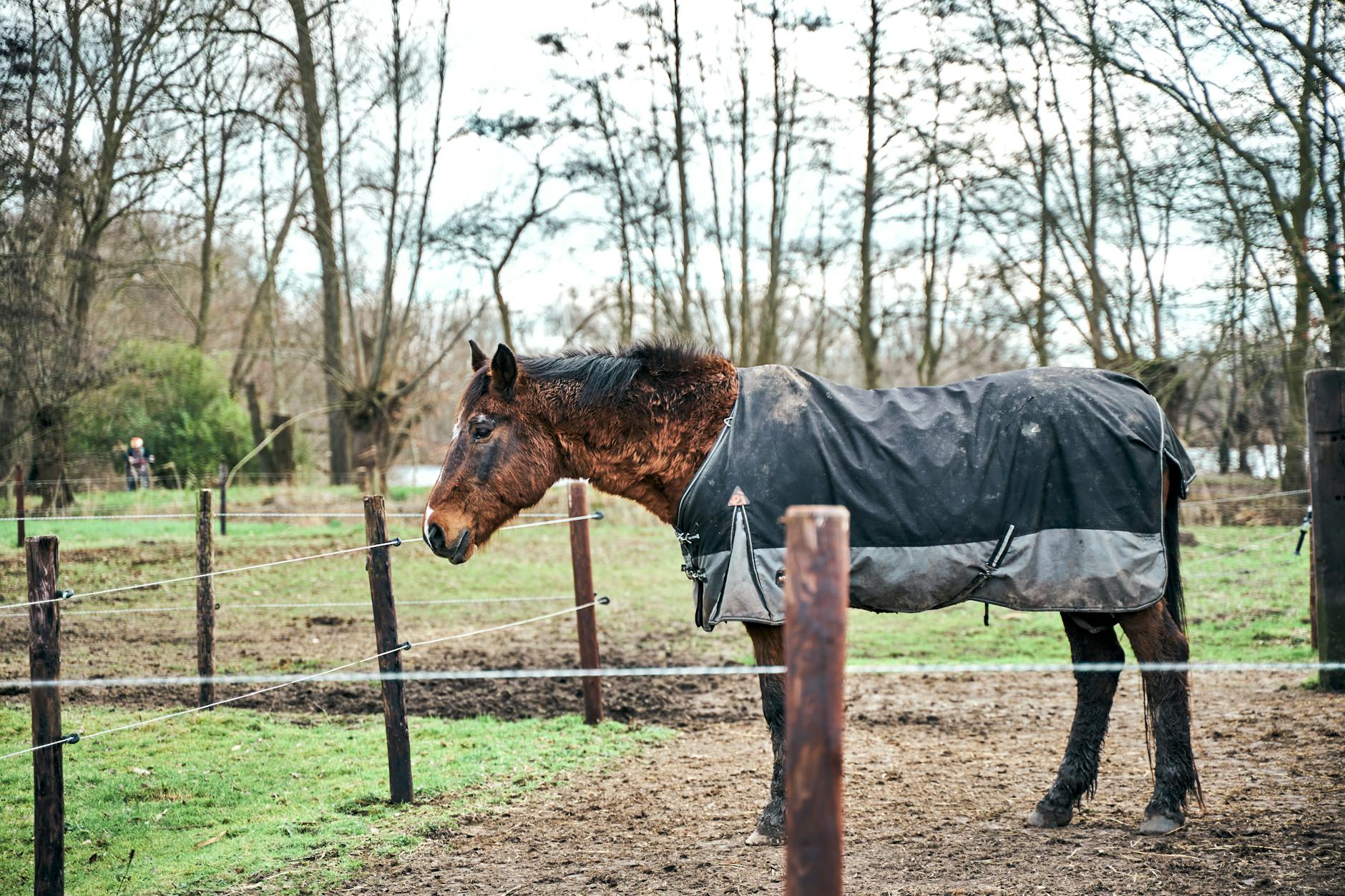
Some horses genuinely do move a lot in their paddocks, especially if they live in a large, varied environment with hills, herd movement, spread-out resources and interesting terrain. But many domestic paddocks are not like that. They are often flat, relatively small, and set up for human convenience more than equine convenience.
So yes, the horse has freedom. But how much movement are they actually doing?
And is it enough?
Is exercise part of welfare?
This is the part I keep circling back to. We talk a lot about emotional welfare now, which is wonderful. We talk about turnout, social contact, forage, nervous systems, choice, consent, and species-appropriate living.
But I wonder whether physical conditioning should be part of the welfare conversation too.
I do think there is a moral question around whether horses need regular movement that supports the body they live in.
Movement does not have to mean riding. It might be groundwork. It might be in-hand walks. It might be long, slow trail rides. It might be hill work, pole work, liberty, leading over different surfaces, ponying, or setting up a paddock system that encourages more natural movement.
It might mean spreading resources further apart, creating a track system, using hills if you have them, walking your horse out like you would walk a dog, or simply building a regular habit of moving the horse’s body in a thoughtful way.
The point is not performance.
The point is maintenance, longevity and physical wellbeing.
When “natural” isn’t really natural
I think sometimes we use the word natural in a way that makes us feel better, but we forget that most domestic horse environments are still very artificial.
A horse standing in a paddock is more natural than a horse locked in a stable all day, yes. But that does not mean the paddock automatically recreates the life of a free-roaming horse.
The footing is often limited. The distances are often short. The food is often concentrated. The water is in one place. The terrain may be flat. The horse may not need to travel or problem-solve or use their body in many different ways.
So while friends, forage and freedom are essential, I am starting to wonder whether we also need to talk about functional movement.
Not forced movement. Not chasing. Not lunging a horse mindlessly in circles to “get the energy out.” Not drilling them for the sake of it.
I mean movement that helps the horse become more capable in their own body.
Movement that builds confidence, balance, strength and awareness.
What might this look like in real life?
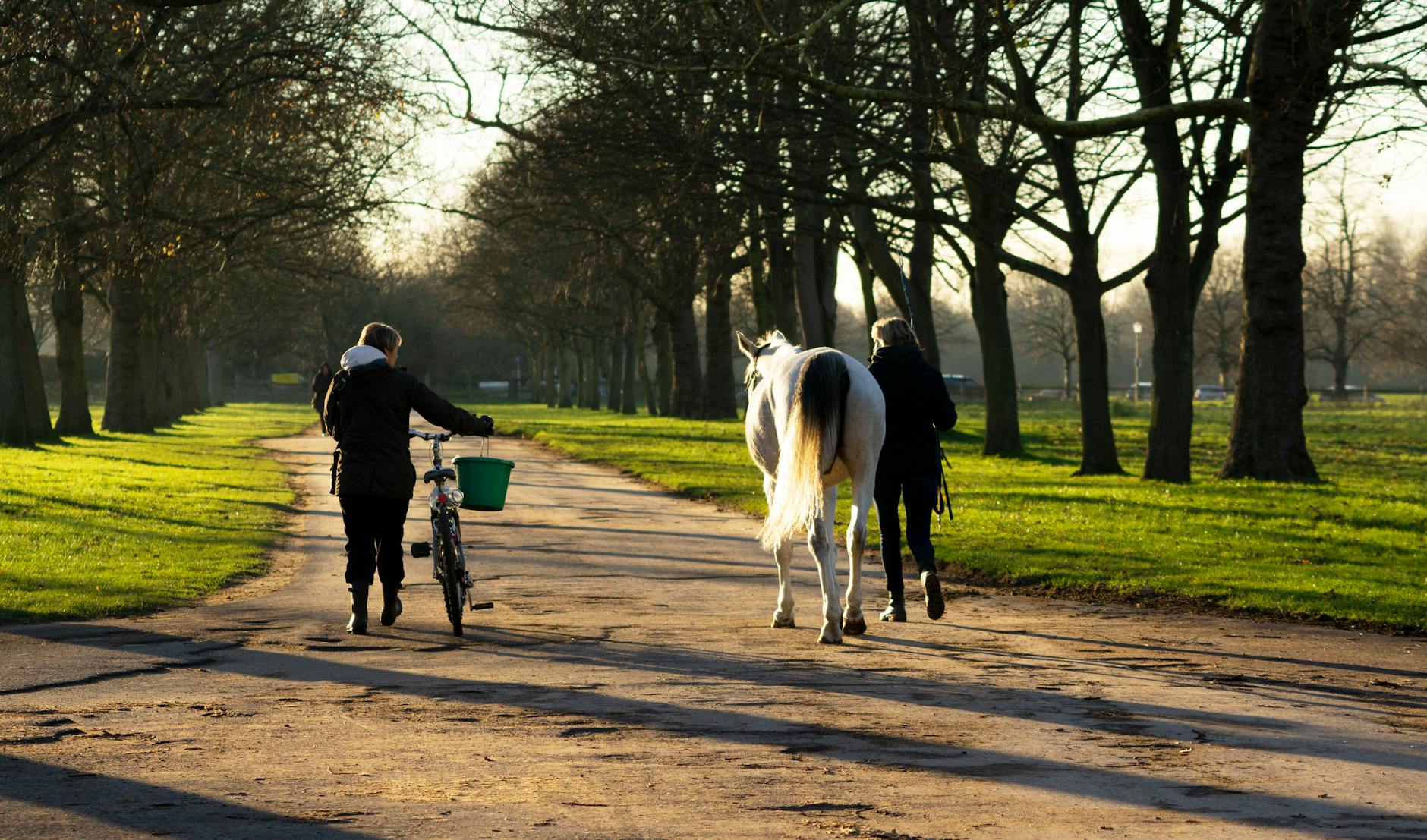
For an older horse, it might look like gentle daily walks, careful groundwork and keeping the joints moving so they do not slowly lose strength.
For a young horse, it might look like exploring different surfaces, learning body awareness, walking out, stepping over poles, and building confidence without carrying a rider too soon.
For a riding horse, it might mean not only schooling in an arena, but also getting out on trails, walking up and down hills, moving over uneven ground, and developing the kind of body that can carry a rider with longevity.
For a horse who is not ridden, it might still mean a regular movement plan. In-hand walks, liberty work, groundwork, obstacles, hill walking, or even changing the paddock setup so the horse naturally moves more.
I think this is where we can become creative.
It does not have to be expensive. It does not have to be complicated. But it does require us to stop assuming that being turned out automatically means the horse is getting everything their body needs.
A missing fourth F?
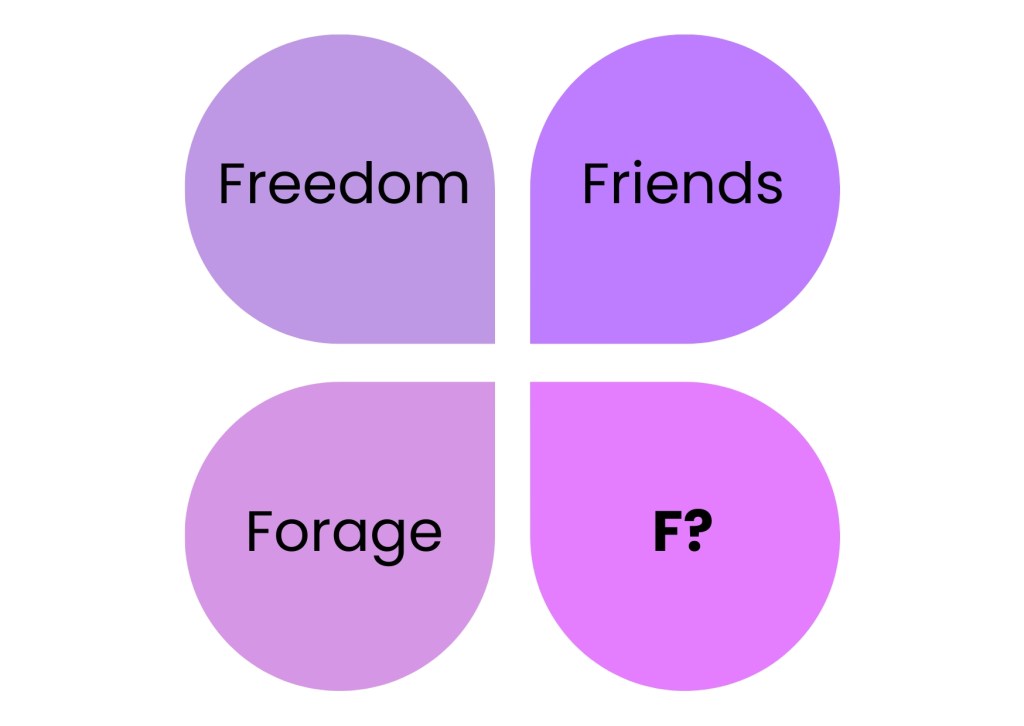
Maybe friends, forage and freedom are still the foundation. I don’t want to take anything away from that.
But maybe we also need to ask whether there is a fourth element.
Fitness, maybe.
Or Functional movement.
Or ph-(/f/) ysical development.
I’m not sure what word fits best yet, but I think the idea matters.
Because a horse is not just an emotional being. They are a physical body that was designed to move. And if we take responsibility for keeping that horse in a domestic environment, maybe part of that responsibility is asking whether their body is being supported enough to stay strong, mobile and capable over time.
Not because they owe us performance.
But because movement is part of health.
Final thought
I don’t think this is about judging people who have horses in paddocks. I have had horses living that way too, and in many ways, it is still far better than the opposite extreme of isolation, confinement and lack of forage.
But I do think it is worth asking whether “paddock life” is always enough, especially when the paddock does not create much natural movement.
Maybe good horse keeping is not just giving horses freedom and assuming they will use it.
Maybe it is also about designing their lives, their training and their environment in a way that helps their bodies stay well.
Friends, forage and freedom matter.
But maybe the next question is: are we helping our horses move enough to truly thrive?
Ready to look at your horse’s whole wellbeing?
If you are unsure whether your horse’s lifestyle, training or movement routine is supporting their long-term confidence and soundness, I can help you look at the bigger picture.
At EquiKinder, I work with horses and humans through calm, practical 1:1 training sessions that consider the body, the mind and the relationship. Learn more about my approach here.
Discover more from EquiKinder by Lisa Rothe
Subscribe to get the latest posts sent to your email.
