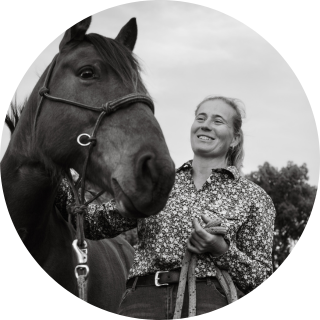
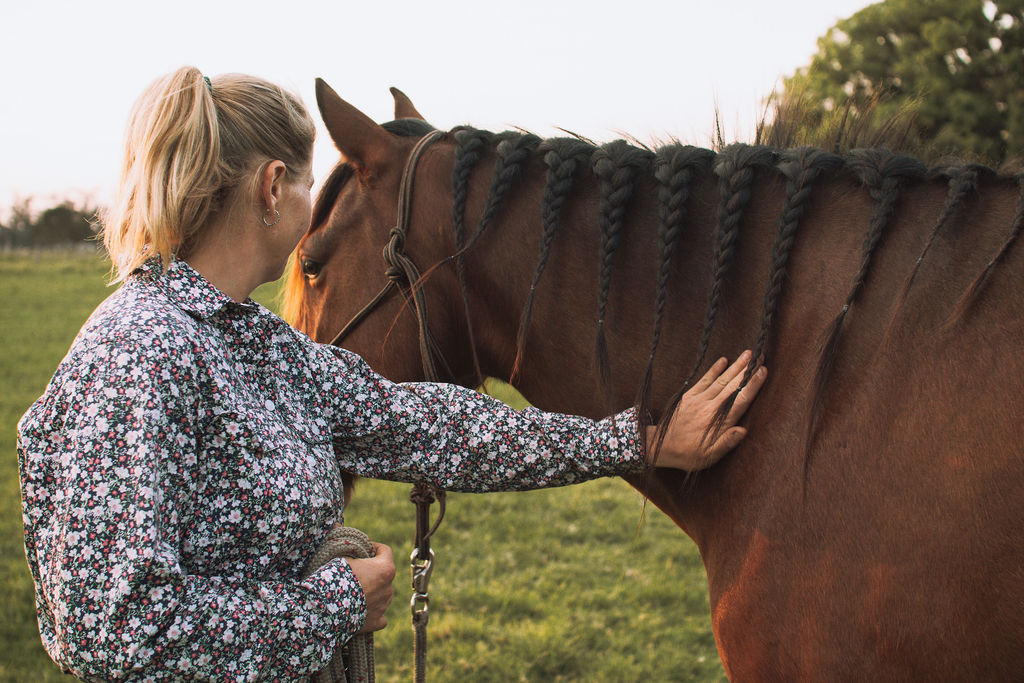
There’s quiet the tension in the horsemanship world. Some preach softness, liberty, and emotional connection. Others stand firm in structure, discipline, and clarity. And somewhere in the middle many of us are just trying to do right by our horses, torn between training methods and horsemanship styles that don’t always align.
I know that feeling well. I’ve swung between extremes, chasing the “right” way to train a horse, only to lose confidence in myself along the way. I’ve over-corrected, over-analysed, and overlooked the horse in front of me all in the name of following someone else’s technique or system.
This post isn’t about right or wrong. It’s about what happens when you stop trying to fit the mould and start listening to your horse, and yourself.
The Pendulum Effect: Caught Between Extremes

At first, learning different horsemanship methods felt empowering. Each one gave me tools, language, and structure. Something to hold onto in the chaos of trying to communicate with a 500kg animal. I devoured everything: pressure and release, liberty work, biomechanics, groundwork sequences, energy work. It all made sense… until it didn’t.
Because the more I tried to follow each method “correctly,” the more tangled I became. One approach told me to wait and offer softness; another said to be clearer, quicker, more insistent. I’d think, “Am I being too harsh?” and then later, “Am I being too vague?” I was overthinking every moment, trying to remember what they would do, instead of feeling what we needed.
The horses felt it. Some tolerated my uncertainty. Others mirrored it right back at me: testing, withdrawing, disconnecting. And when a horse didn’t respond the way the method said they should, I didn’t question the method. I questioned myself!
Looking back, I can see how much I craved certainty. Labels like “emotional,” “classical,” or “natural” horsemanship gave me a sense of belonging and identity. But eventually, those same labels started to restrain me. I wasn’t training a method. I was in relationship with a horse. And relationships don’t fit neatly into categories.
When My Horses Became My Teachers
It wasn’t one big moment that shifted everything. It was dozens of small, quiet ones. Moments where the horse didn’t respond the way the book said they would. Moments where something felt off, even when I was technically doing it “right.” Moments where I finally stopped trying to follow instructions and started listening instead.
Daisy taught me that being too soft can actually feel unsafe. I tiptoed around her with the best of intentions, trying to be gentle, intuitive, and energetically aware. But she didn’t want nuance. She needed clarity. The day I stopped overthinking and gave her firm, consistent boundaries, she relaxed. She sighed. Her shoulders dropped. In trying to be “kind,” I had become confusing. What she really needed was someone who could show up with leadership and calm direction.
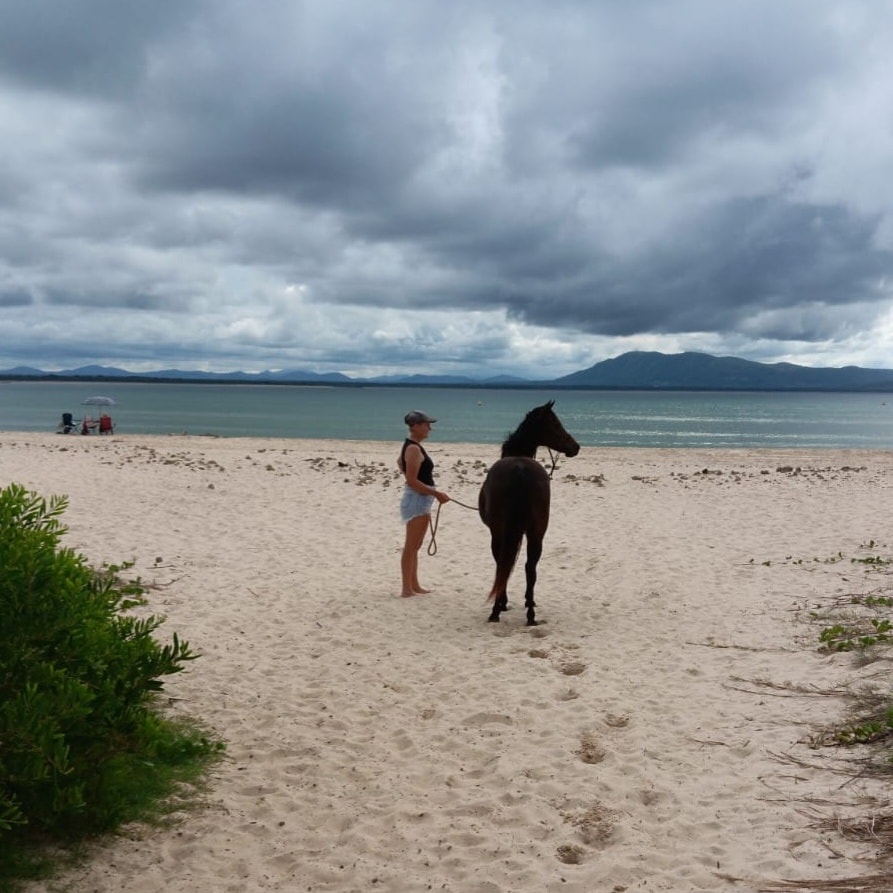
Little Ears was the opposite. I labelled him as pushy, distracted, even disrespectful. I tried to correct him, thinking I was giving him structure. But the more I pushed, the more he panicked and pushed back. What he needed was for me to slow down. To soften. To guide him gently, showing him that pressure didn’t mean danger, but guidance. With him, I learned that less isn’t just more – it’s everything.
These two horses, so different in their needs, taught me the same lesson: no tool is inherently good or bad. It’s how, when, and why we use it. Rope halters, clickers, lead ropes, liberty circles – they’re all neutral until we give them meaning. The difference is whether we’re reacting from habit or responding with feel.
More than anything, they taught me that being present and attuned matters more than getting it “right.” Because when you start to lead from the moment (instead of from the method) your horse notices. And things begin to shift.
What Is Anchored Attunement?
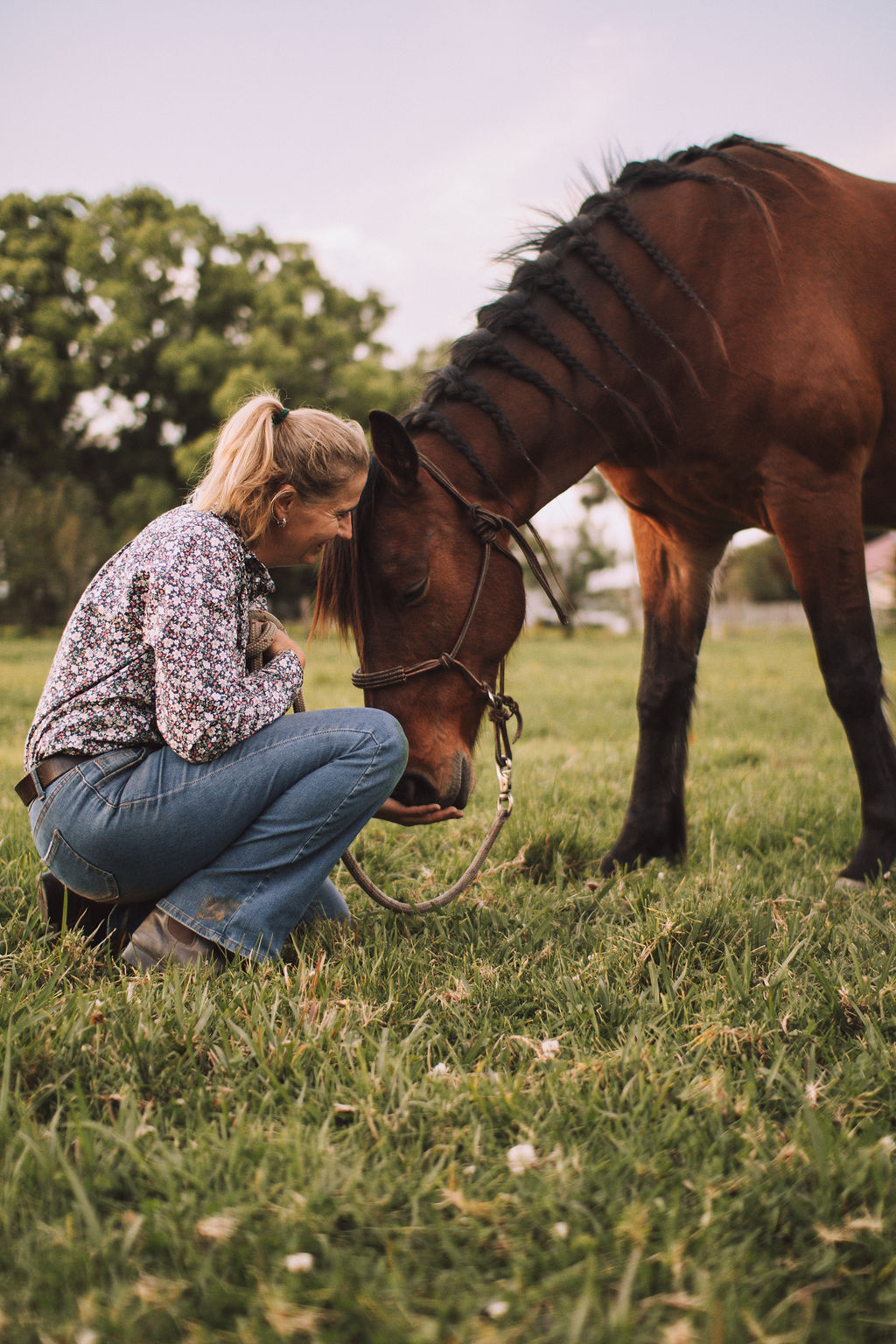
After years of trying to fit into styles, systems, and labels, I needed a new framework. One that made room for nuance, flexibility, authenticity, and real connection. That’s when the words anchored attunement came to me.
Anchored means grounded in my values: connection, clarity, curiosity, and kindness. It means I’m steady. I know who I am, what I stand for, and how I want to show up with horses.
Attunement means I’m listening deeply and I am fully aware and present with all my senses. I’m reading the horse’s emotional state and adjusting with empathy. I’m not guessing what they need. I’m observing, asking, and feeling.
Together, anchored attunement is not a method. It’s a mindset. A way of being with horses that is both stable and responsive.
This shift changed everything. I stopped worrying whether I was being “too firm” or “too soft.” I started asking: Is my horse more connected, more relaxed, more willing? Am I being honest and present? Am I grounded in myself while attuning to them?
That’s the heart of anchored attunement. It’s not about doing the same thing every time. It’s about being the same person every time.
Consistent in how I show up. Flexible in what I offer.
Why Methods Can Be Helpful — Until They’re Not
In the beginning, having a style or system to follow felt like a lifeline. It gave me direction, language, and a sense of belonging. I could identify as “a liberty trainer,” or someone who followed “classical principles.” And in a world overflowing with opinions, that kind of clarity felt safe.
Methods offer scaffolding. They help us build our foundation. They give us tools, philosophies, and community. But if we hold them too tightly, they can also become cages.
The truth is: Horses don’t know our style!
They don’t care whether we follow Trainer A or System B.
They care how we show up: our timing, our tone, our intent. They respond to congruence, not credentials.
The more I tried to label myself, the more disconnected I felt from the horse in front of me. I was stuck trying to “do it right,” instead of doing what was needed. And sometimes, what was needed contradicted the method. That’s when I realised: no one philosophy has all the answers – especially not for all horses, all the time.
Methods matter when they build understanding, but they become a barrier when they put us in a box.
Anchored attunement freed me from that box. It reminded me that I don’t have to “pick a side.” I just have to pay attention. And make decisions based on the horse, not the handbook.
Trust Yourself
If you’re somewhere in this messy, beautiful space in the middle – you’re not alone!
If you’ve ever felt torn between different voices, overwhelmed by conflicting advice, or unsure whether you’re “doing it right,” I promise you’re in good company. All of us have been there. Most of us still are.
It’s okay to outgrow methods.
It’s okay to change your mind.
It’s okay to question something that used to feel like truth.
That’s not failure. That’s growth.
What matters most is that you keep showing up with intention, curiosity, and a willingness to learn. Let your horse guide you more than any method. Let your own values anchor you. Be open to input, but never lose your inner compass.
You don’t need to pick a side to be a good horse person.
You just need to pay attention – to your horse, to your body, to your gut.
Confusion is part of the process. So is clarity. And they often take turns.
From Correct to Congruent: A Closing Invitation
In the end, it’s not about being perfect or getting it right. It’s about being congruent.
Because your horse doesn’t need perfection. They need presence. They need you to mean what you say, to feel what you’re asking, and to show up honestly. That’s what builds trust. That’s what creates connection.
So if there’s one thing I hope you take from this, it’s this:
Don’t pretend to be someone else. Don’t perform softness if you feel unsure. Don’t mimic firmness if your heart isn’t behind it. If you want to change, do the work. Grow. Learn. Keep evolving.
Build a toolbox, but don’t worship the tools. Learn the techniques, but don’t lose your feel. Stay curious, question everything, and trust your gut more than the glow of a confident trainer. Be consistent – not in your methods, but in the way you show up.
And give yourself permission to try things. To mess up. To course-correct.
Mistakes aren’t failures. They’re feedback. As long as we stay open, reflective, and willing to learn, we’re growing. And that growth benefits our horses more than perfection ever could.
Also, remember: your horse is not a tool. They’re a sentient being. A teacher. A mirror. A partner.
Ask yourself:
- What is my horse asking of me in this moment?
- What can I offer honestly, kindly, and clearly?
- What can I do to become a better partner in this relationship?
Let those questions guide your journey more than any method, technique, or trend.
Mindset matters more than method! This path isn’t about choosing sides. It’s about choosing presence.
And that’s something all horses and all humans can benefit from.
Ready to Dive Deeper?
If this message resonates with you and you’re looking for support to become more grounded, congruent, and attuned, I offer horse training sessions that fit your needs. Whether you’re new to this or want to deepen your bond with your horse and yourself, I’d be happy to help!
Contact me to book a session or have a chat. Let’s explore what anchored attunement could look like for you.
Written by Lisa (with the help of AI)
EquiKinder by Lisa Rothe – Where Horsemanship Meets Personal Growth
Discover more from EquiKinder by Lisa Rothe
Subscribe to get the latest posts sent to your email.

2 thoughts on “Anchored Attunement: Finding Balance in a Divided Horsemanship World”