Horse Starting That Holds Up
A calm, horse-first start that builds confidence, regulation, and real rideability.
You’re not just paying someone to “break your horse in.”
You’re choosing the person who will shape your horse’s first ridden experiences and those early experiences often become the blueprint for the rest of their riding life.
My starting program is designed for owners who care about the horse’s emotional wellbeing and want a result that’s safer, more reliable, and easier to continue at home.
Phone/WhatsApp:
+61 487 944 670
“Lisa took the time to truly connect with my horse and build trust, which made all the difference. […] I would highly recommend Lisa to anyone looking for someone who understands horses deeply and approaches their work with both compassion and expertise.“
-Evie
My approach
For me, a start is not a “get on and get it done” job.
It’s an education that I take very serious because I understand the gravity of this process.
I focus on:
- pressure and release as a language (clear cues + clean release)
- nervous system awareness (thresholds, recovery tools, regulation): Moving at the horses speed, not our timeline!
- progressive exposure (small steps that build confidence, not shutdown)
- calm, clear and fair boundaries (leadership as guidance, not obedience)
I want your horse to choose the right answer because they understand it, not because they’ve learned to endure pressure.
Program options
Foundation Start (30 days)
Best for: young horses, lightly handled horses, or owners wanting groundwork + a safe first layer before ridden work.
Focus: handling, pressure & release language, movement regulation foundations, and tack prep.
Full Start (60–90 days)
Best for: older (un-)handled horses, sensitive horses, horses with avoidance/fight patterns, or owners who want a more reliable ridden base.
Focus: all foundations + consistent ridden walk/trot basics + stronger self-regulation and repeatability.
(Not every horse needs 90 days, but many benefit from it. I’ll be honest about what your horse is telling me and what’s realistic. Some horses move faster, some need longer. My priority is safety, confidence, and carry-over to home.)
Hi! I’m Lisa.
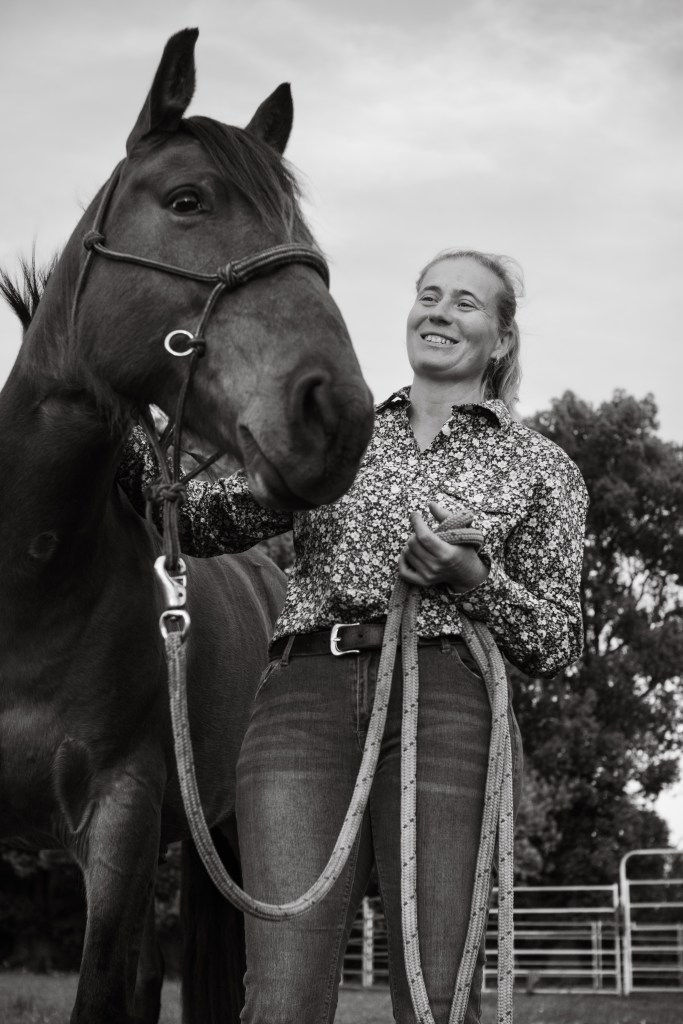
I take horse starting seriously, because I understand the gravity of this process.
This isn’t “just another horse” to me.
A start is often the make-or-break moment for a horse’s ridden life: it’s when they learn whether the human world is safe, confusing, pressuring, or predictable. My goal is to make the experience as positive and confidence-building as it can be, while still creating real understanding and boundaries.
My goal is always in producing a horse that feels safe enough to learn rather than “getting the job done”.
“[Lisa’s] calm, thoughtful approach allowed me to understand horsemanship at a whole new level.” -Freya
Pricing
Training: $395/week
Agistment: $55/week
Total: $450/week
Training usually includes 4–6 sessions/week, depending on what the horse needs and how they learn best.
Not included:
- extra feed/hay/supplements if needed
- farrier, vet, dentist, bodywork, medications
- (emergency) transport
What you’ll receive
- regular progress updates (plain-English, not jargon)
- video snippets when useful (conditions permitting)
- clear milestones and next steps
- a realistic recommendation if your horse needs more time
- a handover plan so you don’t lose the progress when your horse comes home
Limited spots
Training spaces are very limited. I keep my program intentionally small so each horse gets the time, attention, and quality of work they need.
If you’re interested, reach out early so we can discuss availability.
Ready to give your horse the start they deserve?
If you want a start that’s calm, structured, and built to last, I’d love to hear about your horse.
Next step: Send me a message with your horse’s age, history, current handling level, your goals and timeline and any safety concerns.
I’ll tell you honestly whether my program is the right fit and what I think is realistic.
Phone/WhatsApp:
+61 487 944 670
FAQs
What’s the minimum age you take horses for training?
I will take horses from 2 years old, but a 2yo start is foundation-focused, not “ride mileage.”
At that age I prioritise handling, confidence, body awareness, and learning the language of pressure and release.
For ridden work, I generally prefer horses to be 3–4 years old (depending on breed, build, and development). I’ll always assess the individual horse’s emotional and physical readiness and we can discuss what’s appropriate.
Do you restart horses (e.g. ex-racehorses/OTTBs)?
Yes. I work with:
- ex-racehorses / OTTBs
- horses returning after time off
- horses that had a rushed or rough start and need rebuilding
- horses with difficult behaviours under saddle (bolting, bucking, rearing)
Restarting is always individual, so reach out and tell me your horse’s history and what’s happening now.
Do you take older or “unhandled” horses?
Yes, as long as it’s a safe fit for the horse and the setup.
Older or under-handled horses often take longer in the early phase because we’re building the basics from zero (catching, handling, feet, boundaries, and trust). The more handling a horse already has, the faster the process usually moves.
What does “started” mean in your program?
A started horse is not “finished.” It means your horse has:
- foundational handling and boundaries
- a clear understanding of pressure and release
- growing confidence with tack and a rider
- finding rhythm and relaxation in movement
- the ability to stay connected and downshift when unsure
- following guidance and accepting leadership on the ground and under saddle
- a solid foundation you (or your rider) can safely continue
I’ll give you a clear handover plan so you know what to do next.
Will my horse be able to canter by the end?
Sometimes, but it’s not guaranteed, and it’s not my primary KPI.
Canter depends on the horse’s:
- balance and strength
- confidence and regulation
- softness and understanding under saddle
Within a 60–90 day start, my focus is on a solid walk/trot foundation and calm, repeatable communication. If canter is appropriate for the horse, we’ll introduce it. If not, we won’t rush it.
What if my horse needs more time than planned?
I’ll tell you honestly. Some horses move quickly, others need more consolidation.
If I recommend an extension, it’s because I believe it will create a safer, more confident outcome, not because I’m trying to drag the process out.
Can I come and watch sessions?
Yes, by arrangement. Watching can be helpful, especially near handover time.
I pride myself on integrity and transparency and encourage horse owners to learn alongside their horse and be part of the process.
Do you offer owner lessons / a handover at the end?
Yes! and I highly recommend it.
A start holds up best when the owner (or regular rider) learns the same cues, boundaries, and reset tools the horse has been taught. Depending on the horse and timing, we can organise a handover session where you watch, ask questions, and practice the foundations so you feel confident continuing the program at home.
What should my horse know before coming to you?
It’s okay if they know very little. If possible, it helps if they can be caught/halter, led and have basic handling, but it’s not required. We can build from where they’re at.
Do you use treats / positive reinforcement?
Sometimes, yes, but it depends on the horse.
My training is based on clear pressure-and-release with good timing, and I’ll use scratches, voice encouragement, rest, and (for some horses) occasionally food rewards to build confidence and create positive associations. I don’t rely on treats as the main training method, and I won’t use food in a way that creates pushiness or boundary issues.
I believe in connection-based training, not mechanically shaping behaviour via operant conditioning (positive or negative reinforcement/punishment).
