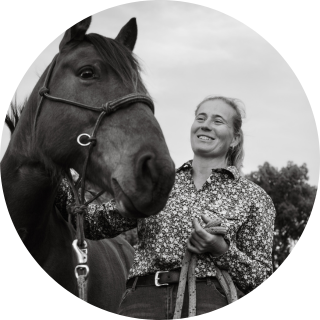
Restarting a Sensitive OTTB Mare
Sometimes the most meaningful breakthrough isn’t big or dramatic. It’s the quiet, almost invisible moment when a horse decides to stay with you instead of fleeing. In this session, I witnessed that shift: a choice for calm over fear.
This real-time groundwork session takes you inside the messy, thoughtful process of building trust with a horse who tends to brace, resist, or shut down. You’ll see how small, consistent asks like yields, circles, and boundary work create opportunities for her to find relaxation and confidence. Rather than chasing perfection, this episode highlights the feel, timing, and patience it takes to support a horse in choosing connection on her own terms.
What you’ll see in this session:
- Building confidence with tools like flags and sticks without creating fear
- Reinforcing yields (hindquarters, forehand, backup) to give meaning to pressure and release
- A pivotal moment when she chooses to step back calmly instead of escaping
- Working through the challenge of small circles and recognising early agitation
- Using sticky arena spots as opportunities for trust and learning
- Closing the session on a note of flow, softness, and trust
Perfect for riders working with horses that spook, brace, or shut down. If you’ve ever wondered how to balance pressure and release without escalating fear, or how to create trust in the middle of resistance, this session is for you.
🎯 Why It Matters
Horsemanship isn’t about controlling every move. It’s about guiding horses toward choices that feel safe, honest, and connected. This episode reminds us that breakthroughs don’t always come in big, dramatic steps. Sometimes the most powerful transformation is the quiet decision to let go of fear and choose calm.
🎥 No quick fixes. No fancy edits. Just honest, real-time horse training exactly as it happens.
📍 Filmed on the Mid North Coast of NSW, Australia.
🔔 Subscribe and follow along as we continue building trust, confidence, and clarity one session at a time.
When a horse stops reacting and starts thinking
In this session, I felt a real turning point with Lola. Instead of pushing through or evading the pressure, she showed me she was thinking her way through the exercise. She started to step forward, then paused, remembered the boundary we’d built in previous sessions, and shifted her weight back without me enforcing it. For me, this was more than just a small adjustment. It was a sign of deeper learning and genuine communication. These moments are what I look for in groundwork: when the horse isn’t just complying, but is actively participating in the conversation. They remind us that the goal of pressure and release isn’t obedience, but awareness, choice, and partnership.
Want a calmer, less anxious horse? Start here
In this clip, I explain the concept of widening a horse’s window of tolerance. Just like humans, horses have thresholds where stress tips them into reactivity or anxiety. If we avoid those edges completely, they never learn resilience. But if we push too far, we overwhelm them. The key is to gently expose them to manageable amounts of pressure or environmental stress, then support them as they return to calm. Over time, this process expands their capacity, creating horses that are more confident, less anxious, and better able to handle the unexpected. It’s not about making them “bombproof,” but about teaching them how to find their own way back to balance.
Think a horse licks and chews because they ‘learned’? Not quite…
The “lick and chew” is often misunderstood in horsemanship. While many believe it shows that a horse has “learned” something, it’s actually a physiological response. When a horse becomes stressed, their nervous system shifts into survival mode, shutting down saliva production and digestion. Once they begin to regulate and return to a calmer state, saliva production resumes, and that’s when we see the lick and chew. This moment tells us a lot about a horse’s ability to cope: some horses release quickly, showing good self-regulation, while others hold on to stress for longer before they let down. If we ignore or rush past these signals, we risk layering unresolved stress. On the other hand, if a horse never licks and chews, it may mean we’re not asking enough to touch thresholds, and without touching thresholds, growth is limited. Recognising and honouring this subtle release is essential for building truly resilient, confident horses.
Before you ask for more… check if your horse is already stressed
In this moment with Lola, I realised she was already at the edge of her window of tolerance – not because of the task, but due to external stressors in the environment. If I had asked her to perform an exercise while she was in that state, I would have pushed her way past her threshold, creating tension rather than learning. Instead, I chose to simply walk a quiet circle, giving her time to regulate and reconnect with me. Within less than a minute, she was calmer and ready to continue. This kind of awareness is vital, especially in environments like horse shows, trail rides, or any new setting where invisible stressors are at play. Often, riders assume their horse is “different” away from home, when in reality the horse is simply coping with added pressures. Recognising and addressing these moments is what builds resilience and trust over time.
Have Any Questions?
Join our monthly Q&As
Discover more from EquiKinder by Lisa Rothe
Subscribe to get the latest posts sent to your email.
