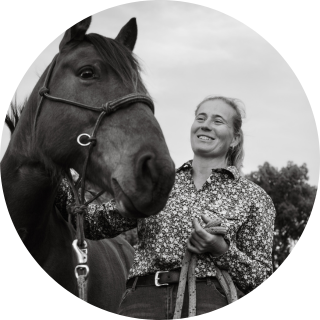
Helping a Shutdown Horse
Riding starts long before you’re in the saddle – it begins with the trust and confidence you build in preparation. This session is about laying that foundation. I focus on helping Sally feel safe, connected, and truly ready for me to get on.
You’ll see how groundwork reveals her tension in the trot, the moments where pressure either builds trust or resistance, and the final exercises from the fence where she learns to accept me above her. It’s a real-time look at how small choices shape big breakthroughs.
Perfect for riders preparing a young or sensitive horse for their first ride, or anyone who’s wondered how to create confidence instead of fear during early training.
🧭 In this episode, you’ll learn how to:
- Saddling as an intentional pressure point
- Reading subtle signs of resistance and release
- Allowing the trot to become a place of softness
- Using the fence to prepare for mounting and trust from above
🎯 Why it matters:
Building trust before the ride means safer, softer, and more willing horses. This episode highlights connection-based groundwork, pressure and release, and the quiet moments that transform preparation into partnership.
🎥 No quick fixes. No fancy edits. Just real-time, honest horse training.
📍 Filmed on the Mid North Coast of NSW, Australia.
🔔 Subscribe to follow Sally’s training journey and learn alongside us.
A Simple Trick to Prevent Girth Discomfort
When saddling, many horses instinctively bloat themselves up or hold tension in their ribcage as the girth is tightened. This can create discomfort, resistance, or even negative associations with being saddled. A simple way to ease this process is to break the girthing into stages. After the initial girth adjustment, take your horse for a short walk. The movement helps release trapped tension, encourages the ribcage to soften, and allows the horse to settle more comfortably before you tighten again. Incorporating short walks into your saddling routine makes the process calmer and more considerate for the horse, reducing resistance and building trust.
Why Horses Blow Out – Signs of Relaxation
One of the most valuable signs of relaxation in horses is when they “blow out” – releasing a long breath through the nose. Horses under stress often hold their breath and create tension through the ribcage, which can affect both their comfort and responsiveness. When a horse exhales deeply, it signals that they are letting go of built-up stress and beginning to settle. Trainers can use this as an important marker during groundwork or riding sessions: the moment a horse blows out is often the moment they’re softening both mentally and physically. By recognising and rewarding this behaviour, we reinforce relaxation and build greater trust in our partnership.
Why Attention Recovery Matters More Than Constant Focus
Many riders feel frustrated when their horse becomes distracted, but expecting 100% attention at all times is both unrealistic and unfair. Horses are naturally aware of their environment, and their focus will inevitably shift. The key is not to demand unbroken concentration, but to assess how quickly and easily we can bring their attention back. A horse that readily re-engages with us demonstrates trust, clarity, and willingness to communicate. Training with this mindset reduces pressure, avoids unnecessary conflict, and fosters a more responsive partnership. Attention recovery, rather than constant focus, is a more realistic and compassionate measure of connection.
Why Horses Need Challenges to Learn
True learning in horses happens when we carefully introduce challenge. While keeping a horse under threshold ensures they stay calm, it can also limit their development if we never push beyond that state. Growth occurs in the space just outside the comfort zone, where the horse experiences mild stress or arousal but remains supported and able to process. By thoughtfully presenting challenges and guiding the horse through them, we help widen their window of tolerance, building resilience and adaptability. Without these moments of challenge, training progress stalls, and horses may never develop the skills or confidence needed in new situations.
Have Any Questions?
Join our monthly Q&As
Discover more from EquiKinder by Lisa Rothe
Subscribe to get the latest posts sent to your email.
