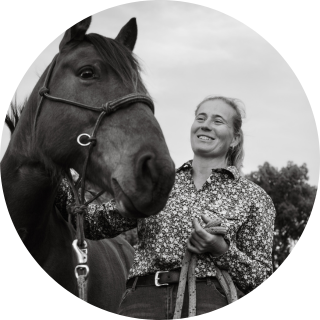
Helping a Shutdown Horse
The first ride is never just about getting on. It’s the culmination of every groundwork step, every boundary clarified, and every moment of trust built along the way. In this episode, we reach that milestone with Sally, showing how patience and thoughtful preparation create a safer, calmer, and more connected first ride.
Across this session, you’ll see the progression from groundwork to saddle and how each exercise translates directly into riding. You’ll experience the philosophy of not rushing, the importance of controlling the environment, and the strategies that turn tension into confidence. This isn’t about forcing a result – it’s about building trust, setting up recovery tools, and honouring the horse’s signals, even in a milestone moment like the first ride.
Perfect for riders preparing a green or sensitive horse for their first ride, or for anyone who has felt unsure about when to push forward and when to step back. If you’ve ever wrestled with mounting nerves, environmental challenges, or wondered how to translate groundwork into riding, this episode is for you.
🧭 In this episode, you’ll learn how to:
- Moving from the muddy round pen into the arena for safety and clarity
- Lunging with the saddle: asking “Would I ride this horse today?”
- Small circles and rib-cage bending as both preparation and a calming strategy
- Building comfort at the mounting block and listening to red flags
- Why mounting itself can become the lesson, not the end goal
- The moment of swinging into the saddle and exploring the arena on a loose rein
🎯 Why it matters
The first ride is more than a milestone – it’s a reflection of the partnership you’ve built. By breaking challenges into manageable steps, controlling the environment, and listening to the horse’s feedback, we replace pressure and conflict with clarity and confidence. This approach creates not just a safer first ride, but a foundation for every ride that follows – rooted in trust, softness, and connection.
⚠️ Filming Note
We had trouble with filming on this day. The early part of the round pen session and the remainder of the ride aren’t included in the footage. What you’ll see is about a five-minute ride in the arena. Before filming, we saddled Sally and took time lunging to settle her, but the muddy footing in the round pen made her feel unsteady, so we moved to the arena for safety. The overall goal – and the one we achieved – was simply to make this a pleasant first riding experience: relaxed, forward, and on a loose rein. It wasn’t about technique, patterns, or exercises under saddle, but about her mindset and leaving her with confidence moving forward with a rider.
🎥 No quick fixes. No fancy edits. Just real-time, honest horse training.
📍 Filmed on the Mid North Coast of NSW, Australia.
🔔 Subscribe to follow Sally’s training journey and learn alongside us.
Why I Control the Environment in Training
One of the most valuable lessons in horsemanship is recognising when the environment is adding unnecessary pressure. Horses learn best when challenges are introduced gradually, not all at once. In this session, the muddy footing in the round pen created instability and worry for the horse, so I moved to the arena where she could feel safer. This allowed me to focus on a single goal – lunging with the saddle – without stacking multiple stressors together. Controlling the environment in this way helps prevent overwhelm, builds confidence, and sets the horse up for success. Whether it’s mud, noise, or new equipment, isolating one variable at a time ensures clarity and makes training a positive experience.
Why I Hold the Lead Rope at My Hip
When leading a horse, the smallest details in how we hold the rope can completely change the message we send. By keeping your lead rope hand anchored near your hip, you create both stability and clarity. If the horse pulls, you have a little space to absorb that movement without losing balance. More importantly, you’re not constantly shifting your hand around, which can blur your communication and make the boundary feel inconsistent. A steady hand means the horse discovers a reliable “wall” – they know exactly where the boundary is, and they also learn to find the release when they respect it. This tiny adjustment makes your signals clearer, your leadership steadier, and your horse more confident.
Feel in Horsemanship: When You Know, You Know
In horsemanship, the idea of “feel” is both simple and profound. It’s not something you can fully explain with steps or mechanics. It’s an instinctive sense of harmony between you and your horse. When you’ve got feel, everything becomes easier: your cues are softer, your horse responds willingly, and the interaction feels almost effortless. It’s that unmistakable moment where you just know you’re in the right place, because it feels good for both horse and human. On the other hand, if you find yourself pushing, forcing, or struggling, it’s a sign that the connection isn’t quite there yet. The journey to developing feel takes time, patience, and awareness – but once discovered, it transforms the way you experience every ride and groundwork session.
Why Frustration Means Step Back, Not Push Harder
One of the most important lessons I’ve learned in horsemanship is to treat frustration as information rather than as something to push through. When frustration surfaces, whether in myself or in the horse, it’s usually a sign that the task is too difficult, unclear, or rushed. Instead of adding more pressure or trying to force a breakthrough, I deliberately lower the bar and step back a few steps. This doesn’t mean giving up; it means creating a smaller, achievable moment of success that rebuilds confidence and clarity for both horse and rider. Over time, this pattern prevents escalation, preserves trust, and allows progress to unfold naturally. By listening to frustration and responding with patience, we create a safer and more sustainable path forward in training.
Small Circles: A Calming Strategy for Horses
The small circle exercise is a practical way to prepare a horse for riding while also giving them a powerful coping strategy for moments of stress. By asking the horse to bend softly through the rib cage from the ground – in the same posture we’ll later use under saddle – we create both understanding and muscle memory. This bending has a profound effect on the nervous system: just as mindful breathing helps humans regulate in stressful situations, the act of bending makes it difficult for a horse to hold onto tension. Over time, the small circle becomes a reliable “reset button” that can be used both on the ground and under saddle. Whether as a recovery tool after worry or as a daily exercise for relaxation, it’s one of the simplest yet most effective strategies to build calmness, connection, and readiness to ride.
Have Any Questions?
Join our monthly Q&As
Discover more from EquiKinder by Lisa Rothe
Subscribe to get the latest posts sent to your email.
