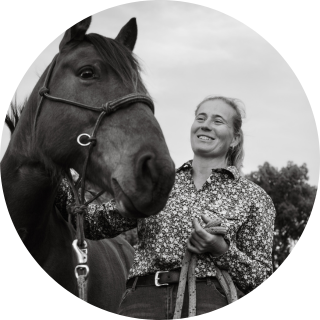
Restarting a Sensitive OTTB Mare
Sometimes the biggest breakthroughs don’t come from the horse at all. They come when the human learns where to stand, how to ask, and how to hold a clear boundary.
This session focuses on coaching the owner through the basics of groundwork with feel. By revisiting familiar exercises like the boundary bubble, pace changes, and the forehand yield, we shift the attention from the horse’s reactions to the handler’s timing, presence, and clarity. What looks repetitive on the surface is actually a deep dive into communication, pressure, and release.
What you’ll see in this session:
- Setting a clear personal space bubble and why it matters
- Matching pace and energy without losing connection
- Turning resistance into softness through pressure and release
- The forehand yield: positioning, asking, and refining cues
- How coaching the human transforms the conversation with the horse
Perfect for riders and owners who feel their horse crowds them, ignores light cues, or gets confused under pressure. If you’ve ever wondered whether your horse truly understands you, this episode will help.
🎯 Why It Matters
Horsemanship isn’t just about training the horse. It’s about refining ourselves. Coaching the human builds confidence, calm leadership, and connection-based communication. These are the skills that turn groundwork into partnership and create horses who feel safe, understood, and willing.
🎥 No quick fixes. No fancy edits. Just honest, real-time horse training exactly as it happens.
📍 Filmed on the Mid North Coast of NSW, Australia.
🔔 Subscribe and follow along as we continue building trust, confidence, and clarity one session at a time.
Teaching Personal Space: Why Your Bubble Matters
One of the most overlooked groundwork lessons is teaching a horse to respect personal space. When a horse walks beside or in front of us, it can feel harmless, but it creates confusion about leadership and safety. By establishing a clear “bubble” of space, we give the horse a simple rule: stay behind me until invited forward. This isn’t about dominance; it’s about clarity. Horses feel safer when they know where they belong in relation to us, and handlers feel more confident when they’re not being crowded. Creating this bubble becomes the foundation for every other exercise, because a horse that understands space can truly relax and listen.
Why Too Much Repetition Backfires in Horse Training
Repetition has its place in training, but when we push the same exercise too long, horses often stop learning and start shutting down. What looks like “stubbornness” is often a horse telling us they’re mentally checked out. No one – horse or human – wants to be drilled endlessly. Instead, it’s more effective to revisit an exercise briefly, release on a good try, and then move on to something different. This not only keeps the horse engaged, but it also teaches them that responding willingly will be rewarded with clarity and variety. By balancing repetition with timing and feel, we turn training into a conversation rather than a battle.
Why Good Leaders Stop and Breathe First
Horsemanship isn’t just about reading the horse. It’s also about being honest with ourselves. If a handler feels uncertain, anxious, or unsafe, pushing the horse forward only adds confusion. Pausing to take a breath and settle your own nervous system is a powerful leadership skill. It shows the horse that you won’t ask for something you can’t embody clearly, and it gives you space to reassess what you’re truly asking. Sometimes the bravest choice is to take a step back, refine your intention, and try again with clarity. Horses value this honesty. It reassures them that their leader is aware, grounded, and trustworthy.
Consequences Build Respect, Not Fear
This moment was a breakthrough for my student, not just the horse. She had previously hesitated to enforce her boundary, worried about being too harsh. But by constantly reshaping or softening her bubble, the horse kept testing and pushing in. Here, for the first time, she held her line with clarity. The horse ran into the flag, touched it on the nose, and instantly understood: this space is hers, not mine. Far from being cruel, this was a gift of clarity. Horses don’t need endless warnings – they need consistent follow-through. Much like counting to three with a child, if nothing ever happens at “three,” the boundary isn’t real. Once upheld, the horse relaxed, respected her space, and no longer needed to test it.
Have Any Questions?
Join our monthly Q&As
Discover more from EquiKinder by Lisa Rothe
Subscribe to get the latest posts sent to your email.
