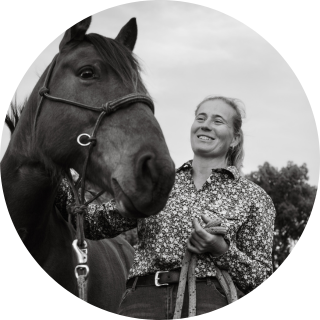
Restarting a Sensitive OTTB Mare
Sometimes the most powerful breakthroughs in horse training aren’t dramatic. They’re found in the quiet moment when a horse chooses connection over resistance.
In this real-time session, I revisit foundational groundwork with a mare who tends to push into pressure and is reactive when unsure. You’ll see how clear boundaries, consistent energy, and patient timing create space for her to soften, trust, and engage without fear. Alongside the horse’s journey, I coach the handler on holding space and finding congruence as a leader.
What you’ll see in this session:
- Setting and maintaining a personal space bubble with the flag
- Reading subtle body language shifts from resistance to softness
- Using small circles to bring focus without escalation
- Coaching the human to match energy and hold boundaries calmly
- Ending on a note of trust, not tension
Perfect for riders working with pushy or anxious horses, or anyone who feels their horse reacts under pressure. If you’ve ever wondered how to turn conflict into connection, this session is for you.
🎯 Why It Matters
Horsemanship isn’t just about teaching skills. It’s about creating safety, trust, and authentic partnership. By slowing down and valuing mindset over mechanics, we give our horses the confidence to soften and stay with us, even when pressure rises.
🎥 No quick fixes. No fancy edits. Just honest, real-time horse training exactly as it happens.
📍 Filmed on the Mid North Coast of NSW, Australia.
🔔 Subscribe and follow along as we continue building trust, confidence, and clarity one session at a time.
Teaching Horses to Respond to Subtle Cues | Horsemanship Tip
One of the most common challenges riders face is getting a horse to respond reliably to subtle cues. My approach is to always begin with the lightest aid I’d like them to recognize in the future – often just a shift in my energy or focus. I then have a mental sequence of progressively clearer cues, building step by step. If the horse still doesn’t respond, and I know they understand the request, I’ll make a sudden movement or sound – not directed at them, but enough to snap their attention back. This “reset” breaks through distraction without fear, so I can immediately return to the light cue sequence. With consistency, horses quickly learn to tune into the quietest aids, becoming lighter, more responsive, and more connected partners.
How to Get a Horse to Move Forward: Training for Responsiveness
Ever Felt Like Your Horse is Ignoring You? You squeeze, cluck, or tap, but your horse won’t move forward. Frustrating, right? Many riders struggle with a horse that refuses to…
Keep readingWhen Horse Resistance is About Willingness, Not Confusion
When a horse resists, it’s important to look deeper than the surface behaviour. In this forehand yield, Lola’s very first response was soft and correct – proof that she understood the cue. The resistance in later attempts wasn’t about confusion, but willingness. Recognizing that difference shapes my approach: if the horse doesn’t yet understand, gentle repetition strengthens the pathway and builds clarity. But if the horse is unwilling, pushing for more often backfires. Instead, I’ll value the quality, willing try and step away on a good note. This balance helps preserve trust, softness, and the horse’s confidence while still encouraging learning.
Teaching Horses Balance & Straightness on the Circle
Circling can be one of the most misunderstood groundwork exercises, but when taught with clarity, it becomes a powerful tool for developing balance and straightness. My method is to anchor myself at the centre of the circle by planting my feet and keeping my hand steady on my hip, so the horse always knows exactly where the middle is. If they drift out, the rope naturally adds pressure; if they drift in, I guide them back to the line. This consistency helps the horse find the “sweet spot” of connection without overcorrection, and it allows them to carry themselves more confidently. Later, I may vary the circle for mental relaxation or relationship building, but for teaching straightness and balance, anchoring the centre makes all the difference.
Why Horses Drift on the Circle | Lessons in Balance & Learning
When Lola drifted to the outside of the circle, I could see it was about balance, but I couldn’t explain it properly in the moment. Instead of bluffing my way through, I chose to be honest with her owner. It showed me a gap in my own education and gave me the chance to dig deeper.
After researching further, I wrote a dedicated blog post (focused on OTTBs, but applicable to every horse) that explains the biomechanics more clearly. The short version is this: drifting often happens when the inside hind isn’t stepping under far enough to support the horse’s centre of gravity. Without that support, the weight tips outward and the horse leans on the rope.
The bigger lesson for me was this: horsemanship is a lifelong journey of learning. Every horse reveals the next piece of the puzzle, and part of being a trainer is not pretending to know it all, but following through to find better answers and sharing them.
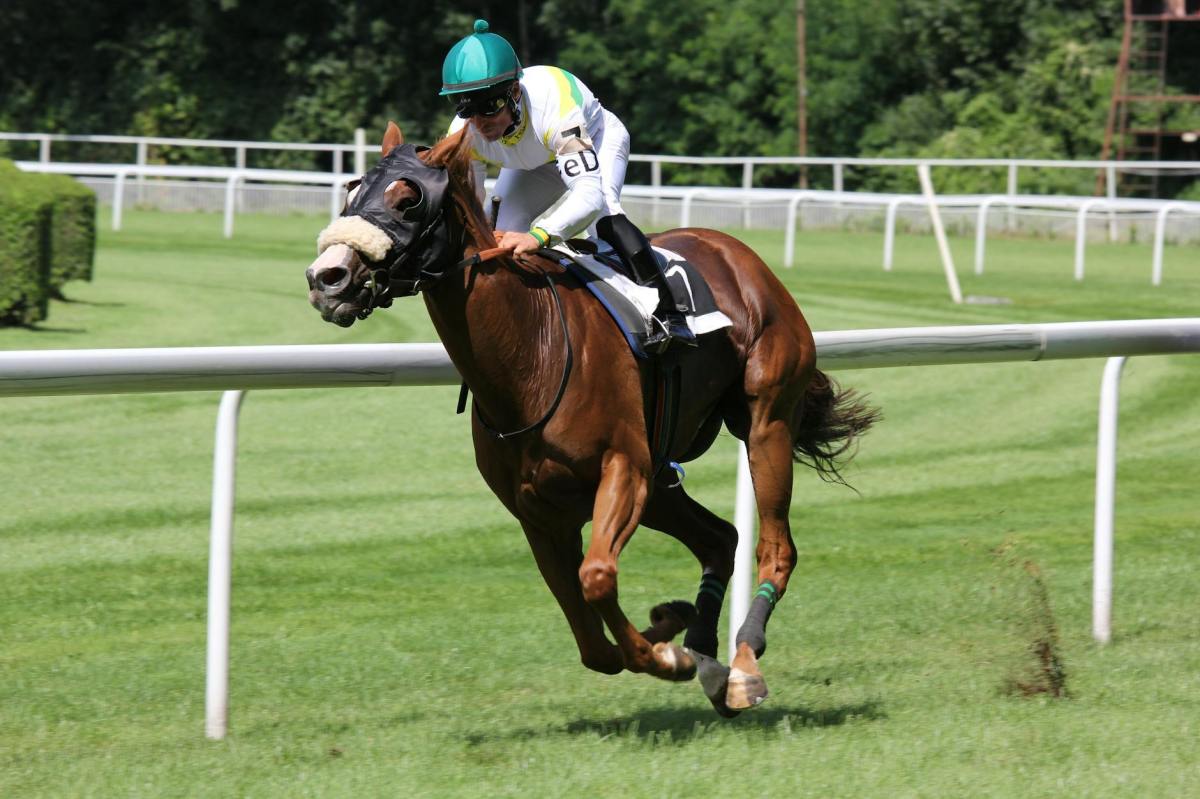
Why Are Off-the-Track Thoroughbreds Crooked? Understanding OTTB Asymmetry and How to Fix It
Discover why off-the-track Thoroughbreds (OTTBs) are crooked, how to assess their asymmetry, and 5 proven exercises to restore balance.
Keep readingHorse Head Shaking: An Early Warning Sign We Shouldn’t Ignore
I decided to add this clip here, even though I don’t love the wording I used at the time. When Lola shook her head at me on the circle, I described it as her saying “piss off” and explained that we should stand our ground. That doesn’t really reflect my philosophy. What I meant was that head shaking is often a horse’s way of expressing discomfort, frustration, or uncertainty, and it’s an important early warning sign. In herd dynamics, these small gestures often come just before escalation, and in training, they can tell us a lot about how the horse is feeling.
For me, that moment isn’t about dominance or “winning.” It’s about awareness. Do I maintain my ask without escalating, do I reset and make my cue clearer, or do I step back entirely? Head shaking reminds me to make thoughtful choices in real time, and even though I didn’t find the perfect words in the moment, sharing it here feels important. Because it’s real, and it shows the kind of reflection that shapes better horsemanship.
Have Any Questions?
Join our monthly Q&As
Discover more from EquiKinder by Lisa Rothe
Subscribe to get the latest posts sent to your email.
